
When content can no longer be clearly distinguished
Deepfakes, synthetic voices and AI generated videos are changing the question of credibility. That is exactly why documented productions are gaining value.
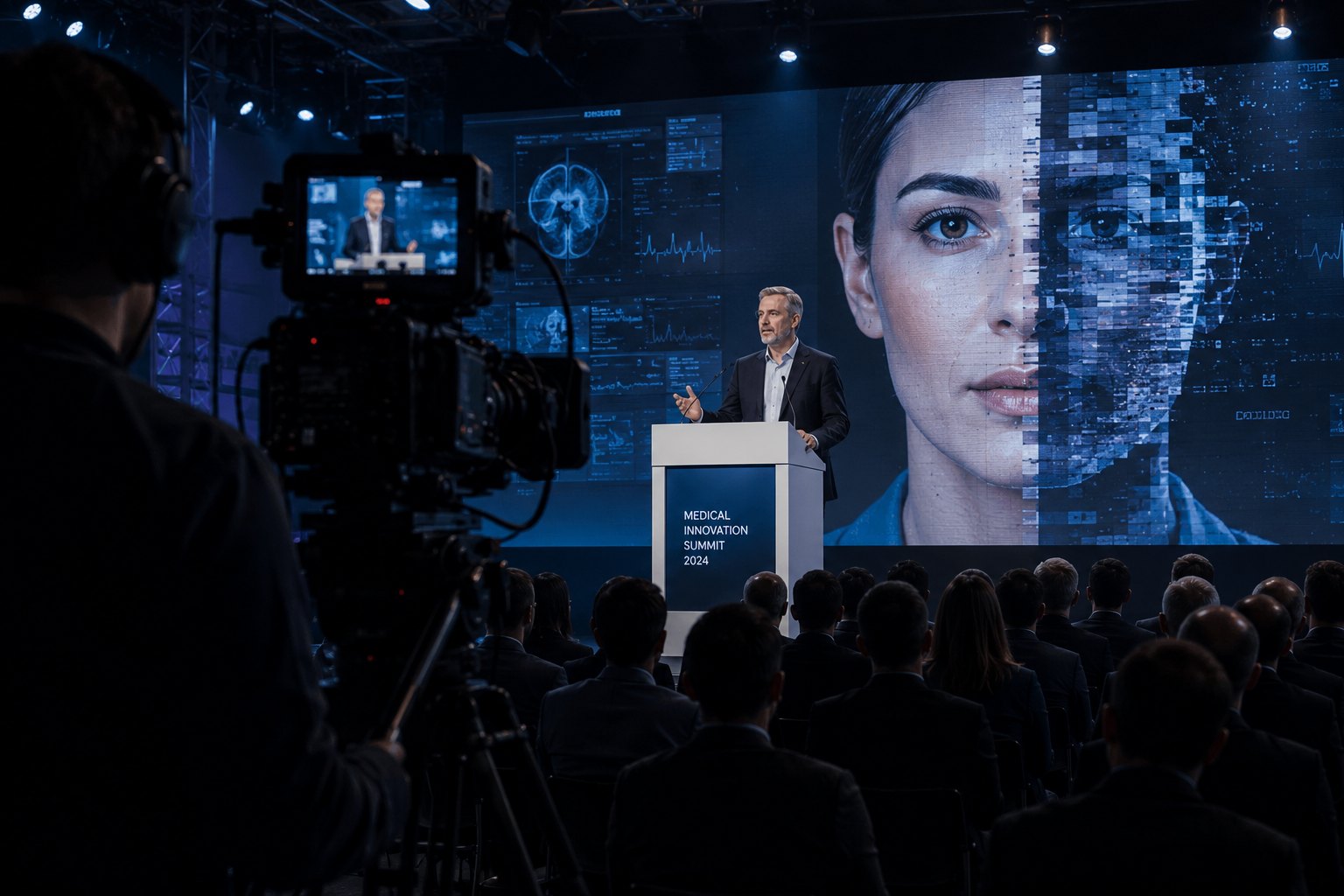
AI content does not become difficult because it looks bad
The real issue is not that AI generated content looks artificial.
The real issue is that it often looks good enough.
Images, voices and videos can now be created or manipulated in ways that make it difficult for many viewers to clearly distinguish what was actually recorded from what was artificially created.
This is where corporate communication changes.
When content can no longer be clearly distinguished by its visual quality alone, a new question emerges:
What creates trust now?
Not image quality alone.
Not polished production alone.
Increasingly, trust comes from origin, context and traceability.
Why AI labelling becomes relevant now
From 2 August 2026, Article 50 of the EU AI Act introduces new transparency obligations for certain AI generated or manipulated content.
Deepfakes, synthetic voices and artificially created videos therefore become more than a creative topic for companies. They become a trust and compliance topic.
In corporate content, event communication and medical communication, this creates a new reality:
It is often no longer enough for content to look professional.
Companies increasingly need to explain how content was created.
Why documented productions are perceived differently
A real KOL interview, a real symposium or a documented panel discussion delivers more than image and sound.
It delivers context.
Who was on site?
In what setting was the statement made?
Which event was documented?
Which statements were actually recorded?
This traceability becomes more important when AI generated or manipulated content is visually difficult to distinguish from real footage.
This does not mean that AI disappears.
But it changes how documented reality is perceived.
Why this matters especially in pharma communication
In regulated areas such as pharma, Medical Affairs and CME formats, it is not enough for content to look high quality.
It often also needs to be traceable, approvable and documentable.
This includes:
- KOL interviews
- advisory boards
- Meet the Expert formats
- CME formats
- medical symposia
- hybrid events
- congress coverage
- internal Medical Affairs communication
- expert statements
Especially in these settings, credibility often comes from real conversations and documented events.
Why hybrid events naturally create valuable real content
Hybrid events produce much more than a livestream.
A medical congress can generate several types of content at the same time:
- spontaneous expert statements
- panel discussions
- background conversations
- presentations
- social media clips
- highlight sequences
- interview material
- content for internal platforms
During multi day events, dozens of real content situations can emerge within a few hours. They can later be reused for KOL interviews, live streaming, Medical Affairs communication or congress summaries.
This creates long term content with high credibility.
Why production quality becomes more important
When real productions are perceived as more valuable, professional execution becomes more important as well.
In medical events, small details often shape the result:
- clear audio
- stable livestreams
- calm multi camera production
- clean presentation feeds
- reliable recording
- professional lighting
- clear speaker guidance
An unstable stream or a faulty recording cannot be reconstructed later.
Especially with international speakers, advisory boards or CME formats, there is often no second chance to record.
AI remains a tool. But not every type of content should be replaced.
The key question is not:
Is AI being used?
The key question is:
Does AI replace the actual content, or does it support the production?
AI will continue to be useful for:
- subtitles
- transcripts
- translations
- rough cut support
- content analysis
- social media variants
- content preparation
It becomes more sensitive where AI replaces the actual statement, person or conversation.
Conclusion
Deepfakes and AI generated content do not only change corporate communication technically.
They change what is perceived as credible.
The more difficult it becomes to distinguish AI generated or manipulated content from real footage, the more important origin, context and documented reality become.
For hybrid events, Medical Affairs and pharma communication, this means:
Professionally produced real content is not becoming less relevant.
It is becoming more relevant.
FAQ
Will AI generated videos require labelling in the future?
For certain AI generated or manipulated content, transparency obligations under the EU AI Act apply from August 2026. The practical implementation is still being further specified.
Why are documented productions relevant for pharma companies?
Documented events, real expert conversations and traceable statements often create more credibility and reduce regulatory risk.
What content is created during hybrid events?
Beyond the livestream itself, hybrid events often generate interviews, highlight clips, panel discussions, social media snippets and internal communication content.
Why is production quality important in medical events?
Unstable streams, poor audio or faulty recordings directly affect perception, comprehension and the later reuse of content.